Keep your keyboard.
Use Type Folio or an external USB keyboard. Open Inkline with Opt+RightAlt+T, move between nine terminals, and choose whether Caps Lock acts as Control. Pinch to resize text; swipe sideways with two fingers to switch terminals.
Terminal emulator + USB keyboard utility
Inkline is a real terminal emulator and a small Unix workspace for reMarkable 2. It also works like an AlphaSmart: write on the tablet, then let it type live or send the whole document into another computer as a USB keyboard.
v0.4.10 preview / Tested on firmware 3.27.3.0
01 / The terminal
Use Type Folio or an external USB keyboard. Open Inkline with Opt+RightAlt+T, move between nine terminals, and choose whether Caps Lock acts as Control. Pinch to resize text; swipe sideways with two fingers to switch terminals.
Inline and shared-memory kitty graphics stay in an adaptive RAM arena. Images use eight gray levels, try lossless JB2 first, and fall back to IW44 when needed. Nothing spills to flash.
Start Inkline when you need it. Quit to return to the notebook interface. A small shortcut service stays available after reboot; notebooks remain the default.
Add Emacs, Git, Python, TeX, remote shells and other utilities. Assign Opt+RightAlt+letter to a command in Settings or from the shell. T always opens Inkline.
Explore the utilities ↗Switch the USB-C port from device networking to an outgoing USB keyboard. Type live with Folio, or send a saved text file into the document open on your desktop. Keep Wi-Fi connected so you can still control the tablet.
Two ways to send your words ↓Choose an e-paper update mode, text darkness and minimum contrast. Use Japanese or Chinese input, Latin accents, a Unicode picker and a shared RAM clipboard. Settings save on normal exit.
Scan and join from Settings page 4, or use the inkline-wifi numbered picker. Saved-network switches stay in RAM; only a successful new profile or confirmed Forget writes the firmware configuration.
inkline-wifi ↗Wi-Fi
SSH to the tablet while the USB-C port is busy. Use Wi-Fi to manage files, start a bulk send, or switch USB mode remotely.
USB device network
Use the familiar reMarkable USB network for installation, shell access, and copying files when the port is in Network mode.
USB keyboard
Switch the same port to a standard keyboard gadget. Folio keystrokes or a complete UTF-8 draft become input in the focused desktop app.
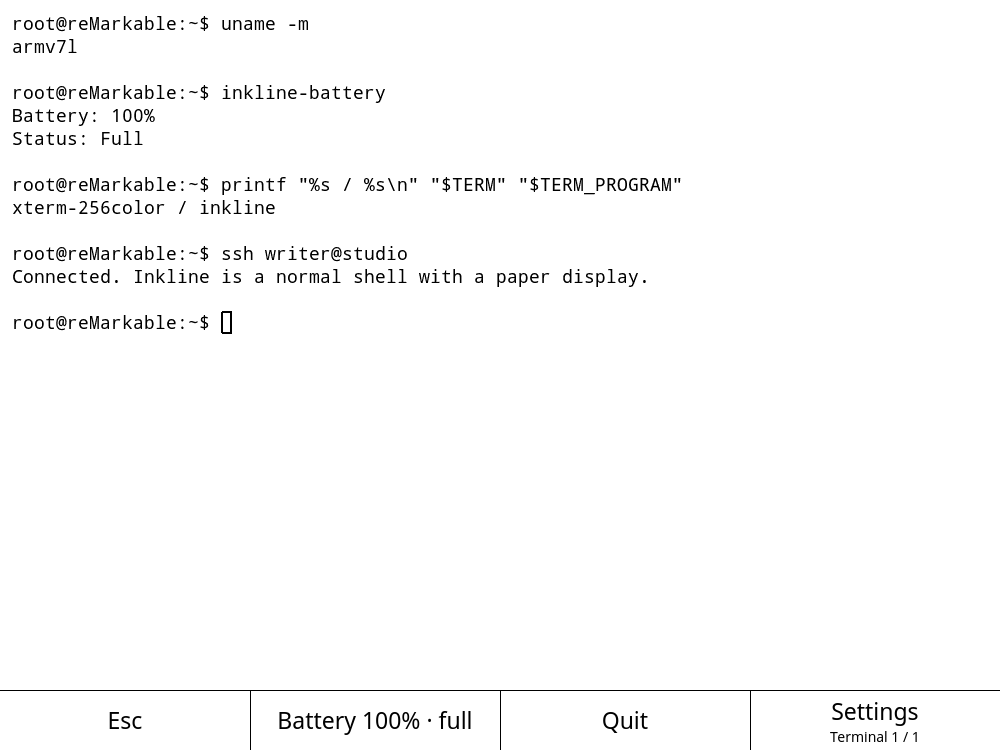
Inkline 0.4.10 on screen
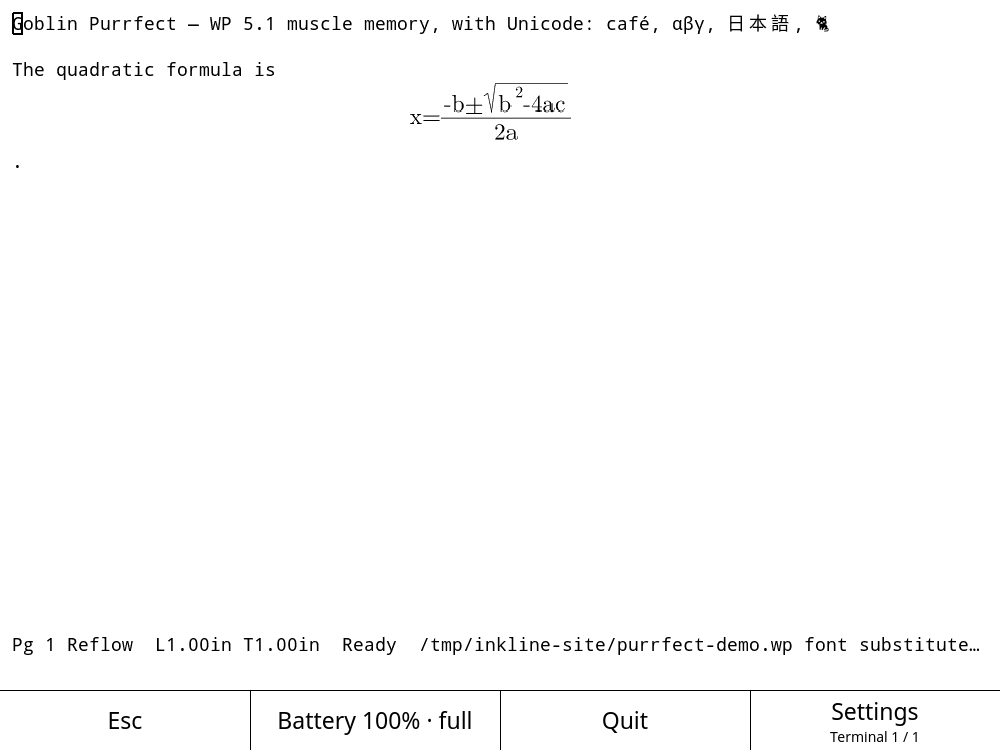
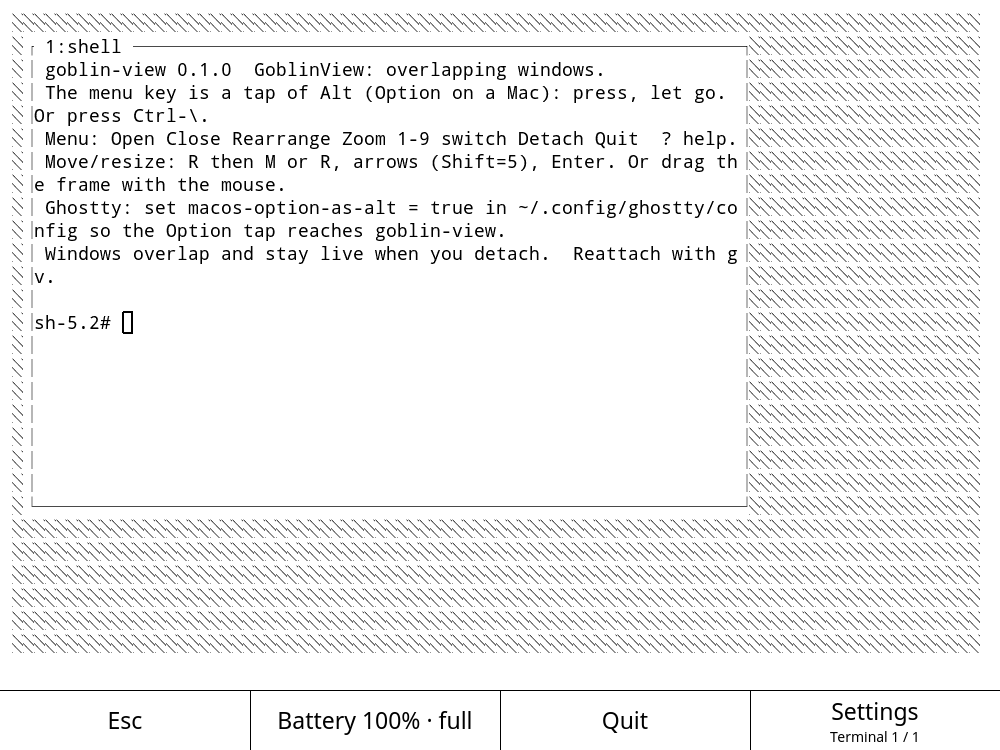
Current Inkline running on reMarkable 2, plus the Emacs/LaTeX workflow and protocol test.
goblin-view -m.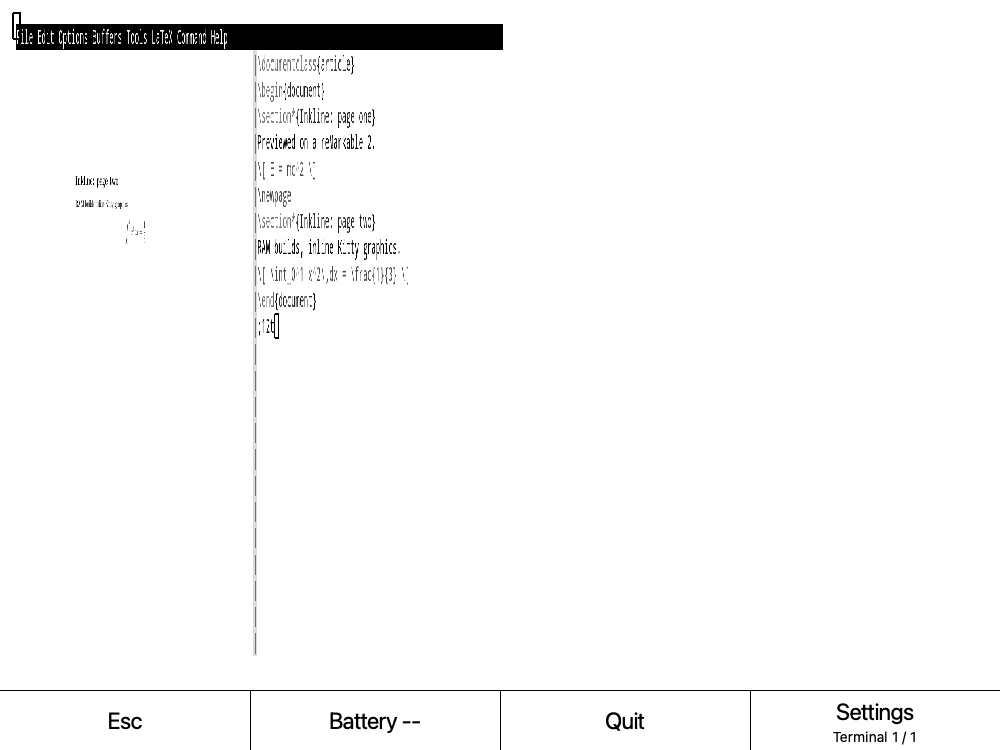
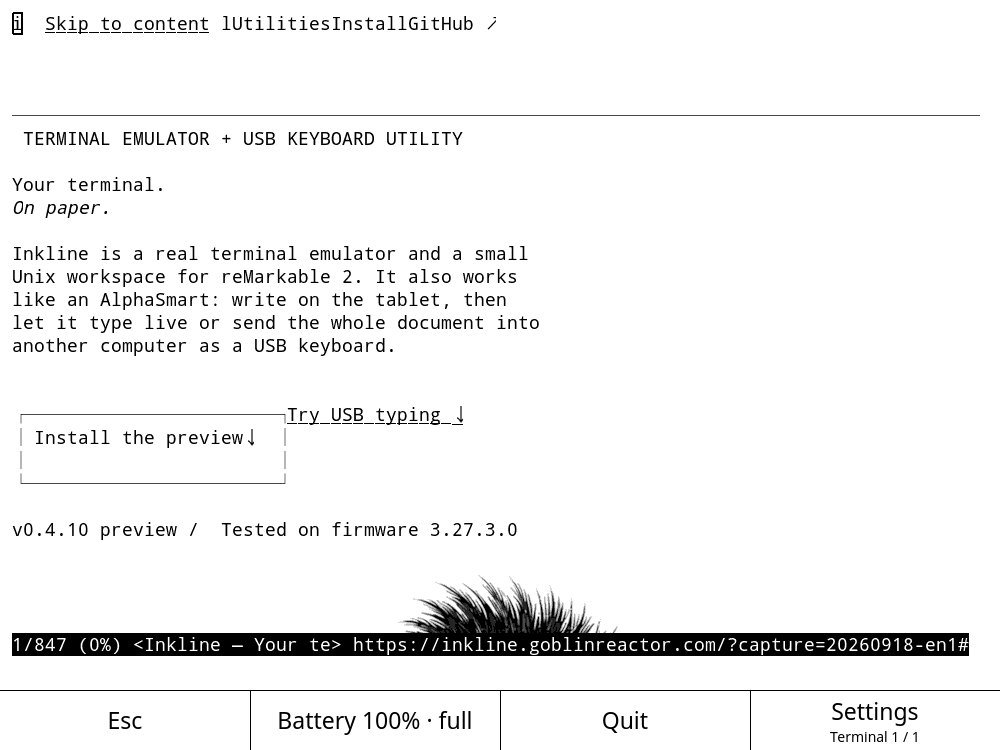
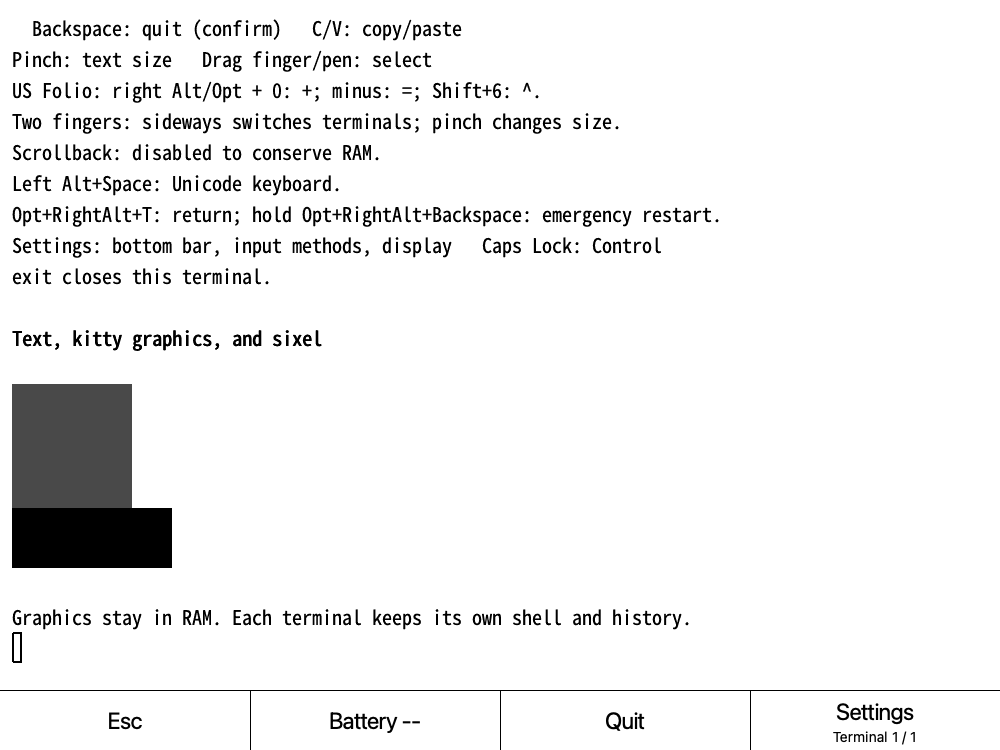
The terminal, GoblinView, Purrfect, and Cha frames were captured over Wi-Fi SSH from the installed ARM build. Capture helpers and output stayed in the tablet’s RAM-backed /tmp.
Run overlapping terminal windows in strict monochrome mode, with Kitty graphics passed through to Inkline.
goblin-view -mEdit source beside its compiled PDF. ghostty-tex sends the preview through Kitty graphics while build files stay in RAM.
emacs -nw paper.texOpen the writing environment with its e-paper display profile selected automatically on reMarkable 2.
goblin-purrfect edit notes.wpBrowse the web inside the terminal and let Kitty-capable pages share the same grayscale screen.
cha https://example.org/Scrollback is disabled to conserve RAM. Swipe two fingers left for the next terminal or right for the previous one. One finger selects text. The pen acts as a mouse when requested by an app; hold Shift to select text instead.
Press right Alt/Option+Space to open Settings, choose Input method, then tap a method or choose it with Up/Down and Enter. Left Alt+Space opens the Unicode keyboard. Romaji enters Japanese hiragana; Pinyin, basic Zhuyin, and Wubi 86 enter Chinese; US-International adds common Latin accents.
For normal US typing, choose Off — direct keyboard in the same menu. Your choice applies to all nine terminals and is saved across restarts. Each terminal keeps its own unfinished composition.
Language switching and typing examples ↗Bundled Noto and GNU Unifont fallbacks add broad Unicode coverage, including CJK, symbols and historic scripts. Right Option+C/V shares a RAM clipboard between all nine terminals and OSC 52 applications.
02 / Typewriter
Typewriter gives the terminal an AlphaSmart-like side: draft in a focused editor, save when you choose, then let the reMarkable act as a USB keyboard for a Mac, Linux, or Windows computer.
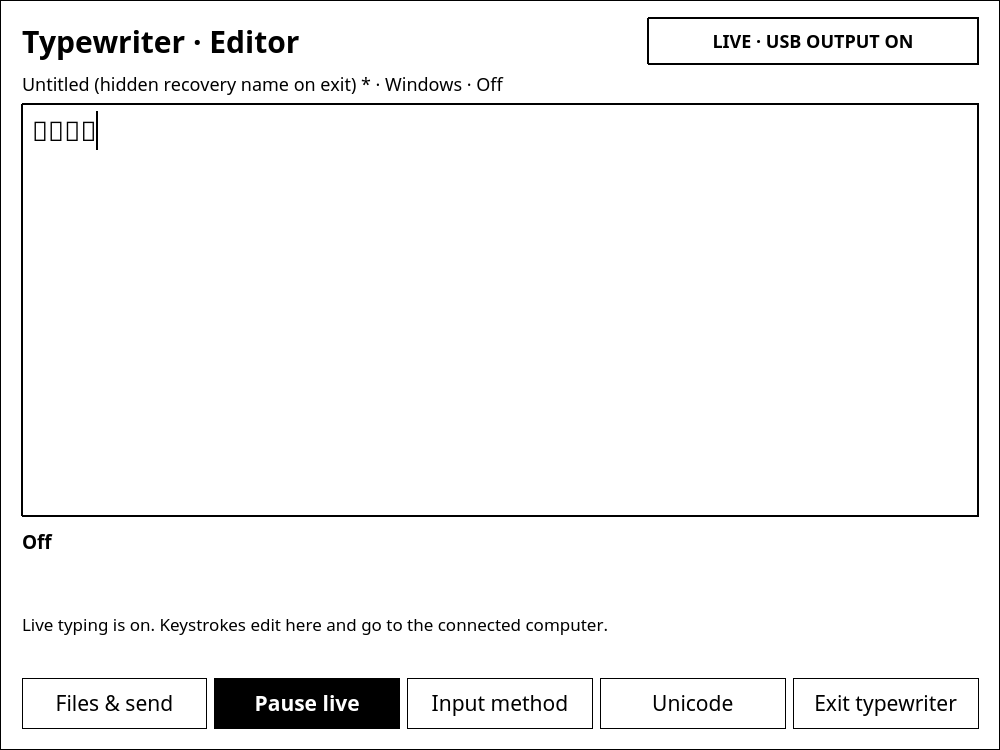
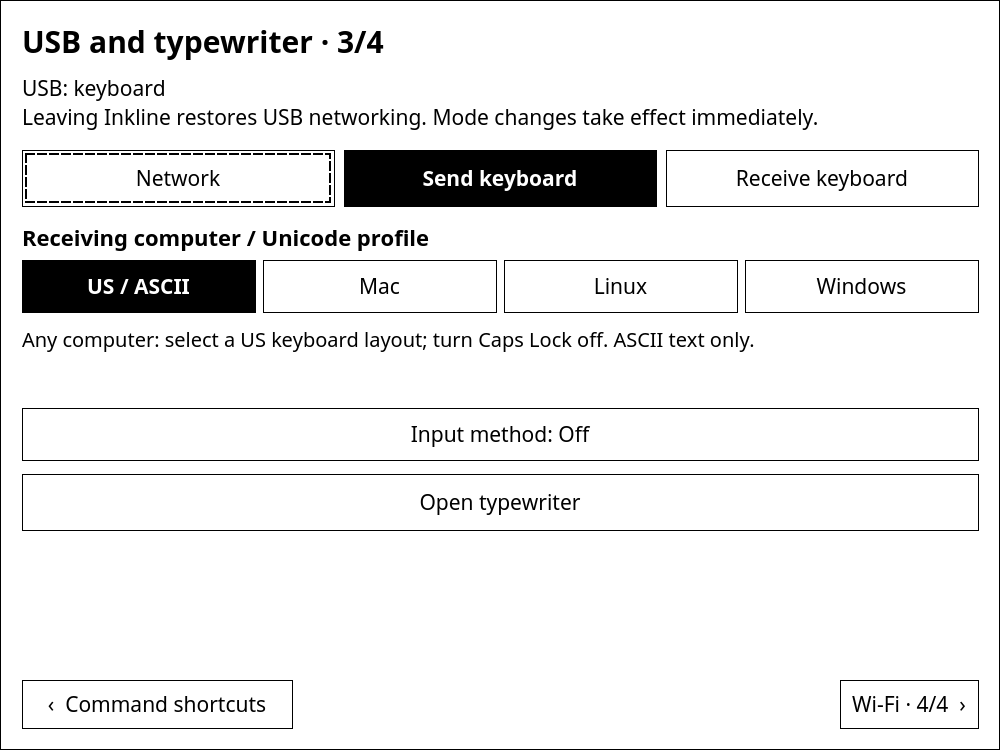
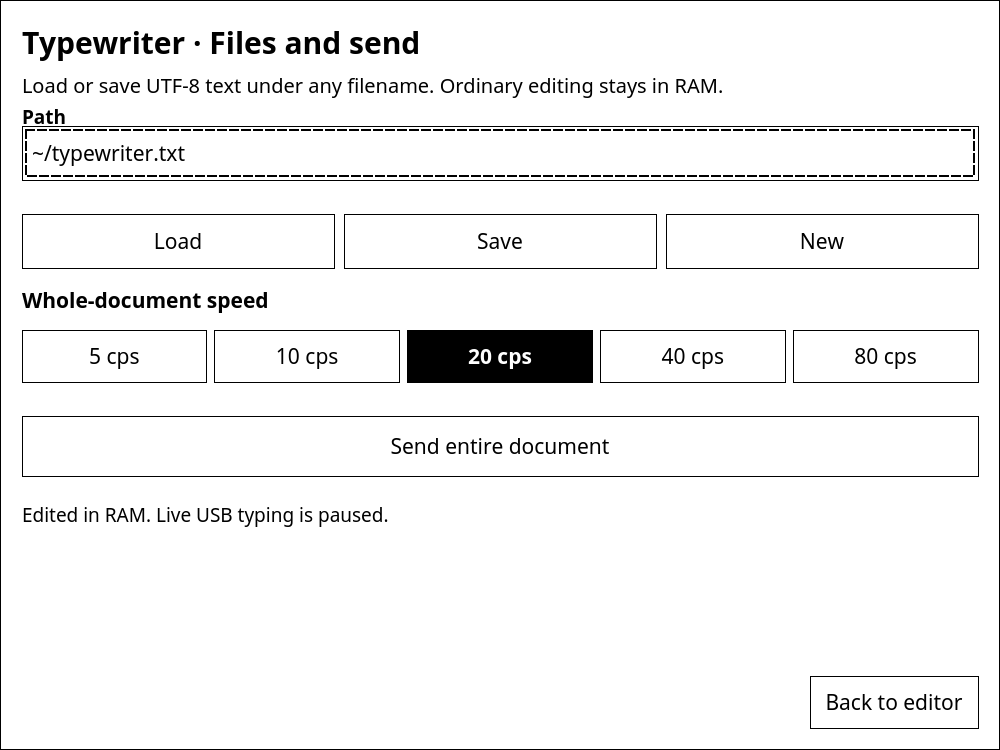
USB networking and USB keyboard mode share one physical port, so only one can be active at a time. Wi-Fi SSH remains available while Inkline is typing into the other computer.
Install Inkline and the Python utility. Use Type Folio while the tablet’s USB-C port connects to your computer with a data cable. For these first examples, select a US keyboard layout on the computer and turn Caps Lock off.
Try it / Live typing
Hello from Inkline. in the tablet editor. Each character edits the local draft and is also sent to the focused desktop document while live typing is active.To send the same greeting from the command line, close Typewriter first and run these commands in Inkline. The five-second delay gives you time to focus the destination document.
~/inkline usb send-keyboard &&
keyboard-send --text 'Hello from Inkline.' --profile us --start-delay 5
Try it / A saved draft
Install the Emacs utility, then create a plain-text draft in Inkline:
mkdir -p ~/writing
emacs -nw ~/writing/letter.txt
Write your letter. Press Ctrl+X, then Ctrl+S to save; press Ctrl+X, then Ctrl+C to exit Emacs. The saved file stays on the tablet. Typewriter can also load and save any UTF-8 filename from its Files & send page.
Connect the computer and open the receiving document. Run this in Inkline to validate the whole file, switch USB mode, then type it at up to ten characters per second. Click the destination during the five-second delay.
keyboard-send --file ~/writing/letter.txt --profile us --dry-run >/dev/null &&
~/inkline usb send-keyboard &&
keyboard-send --file ~/writing/letter.txt --profile us --start-delay 5 --cps 10
The file’s text is typed into the receiving app; formatting and files are not transferred. Keep the source unchanged during sending, then save the receiving document. File sending streams through RAM without temporary spool files or a fixed file-size limit.
In Typewriter, open Files & send to save or load a document, choose 5–80 characters per second, send the whole editor, or stop an active send. The editor stays in RAM until Save or normal Inkline exit; an untitled document uses a hidden recovery name only at exit.
For a command-line send, press Ctrl+C on the tablet to stop. From another Inkline terminal, the first command below stops the sender. The second restores USB networking. Closing Inkline also restores networking.
keyboard-send --stop
~/inkline usb network
Run mode changes on the tablet or over Wi-Fi SSH. The same USB port cannot provide network access while it is acting as a keyboard.
Choose a profile that matches the receiving computer: Mac uses Unicode Hex Input for characters through U+FFFF; Linux needs compatible Ctrl+Shift+U input; Windows uses WinCompose. Configure that input method first, then change --profile us to --profile mac, --profile linux or --profile windows. Live Typewriter also supports Inkline’s Japanese and Chinese composition methods.
03 / Current state
Inkline is being built in the open. The installation procedure is part of the project, including preflight, verification, recovery, and removal.
See the device test recordTwenty-two automated checks cover terminal graphics, input, sessions, clipboard, battery reporting, USB text encoding, the Typewriter editor, Unicode fonts and recovery. USB mode switching and network restoration have been exercised on reMarkable 2.
Version 0.4.10 targets firmware 3.27.3.0. Updates preserve open terminals; quit and reopen Inkline to use the new version. I confirmed Type Folio typing and keyboard launch after a fresh reboot in an earlier release.
Kitty Unicode placeholders, animation playback and complete sixel display modes remain unfinished. Sixel is not yet advertised automatically. USB typing in desktop apps, the current Opt+RightAlt launch chord, physical gestures and USB hotplug still need broader hardware testing.
What changed
September 17, 2026
inkline-battery reports percentage and charging state. Inkline uses its compact value in a no-color shell prompt, and reads battery state without storage writes.keyboard-send.Set up USB keyboard and typewriter ↗
clear command removes the startup Goblin and other visible Kitty and sixel images.September 15, 2026
The 0.3.5 display changes are included: choose Fast, Balanced, Crisp, Mono, or Saver in Settings.
Read the PDF manual (9 languages) ↗04 / Make it yours
Install the Inkline preview, then add remote shells, editors, Git, and Python.